

Calming Techniques for High-Pressure Moments
Master grounding techniques and breathing methods that work in real time. We’ve put together five proven tactics you can use right now when stress builds up.
When pressure builds, your body goes into fight-or-flight mode. Your heart races, breathing gets shallow, and thinking clearly becomes nearly impossible. That’s where grounding techniques come in. They’re not magic. They’re practical tools that interrupt the stress cycle and bring you back to the present moment.
The techniques we’re covering here aren’t complicated breathing exercises you need to practice for weeks. They’re simple methods that work in seconds — whether you’re at your desk, in a meeting, or facing an unexpected change at home. We’ve tested these with professionals across Ireland, and they work because they’re rooted in how your nervous system actually responds to calm, focused attention.
The 5-4-3-2-1 Grounding Technique
This is probably the most accessible grounding method. It works by anchoring your attention to your immediate surroundings through your senses. When you’re spiralling, your mind’s disconnected from the present. This technique pulls you back in.
1
Notice 5 things you can see
Look around. Pick specific details — not just “a desk” but “the blue notebook on the left side of the desk” or “the shadow from the window on the wall.”
2
Name 4 things you can touch
Feel them. The texture of your chair, the temperature of your coffee cup, the fabric of your sleeve. Actually touch them. Don’t just think about it.
3
Identify 3 things you can hear
Listen actively. Background noise, someone typing, the hum of the heating. Most people skip this one, but it’s powerful.
4
Notice 2 things you can smell
Even if the smell is subtle. Coffee, hand cream, the air from outside. Your sense of smell is closely linked to emotion and memory.
5
Taste 1 thing
Chew gum, sip water, or taste the inside of your mouth. This completes the sensory circuit and brings your awareness fully into your body.

Box Breathing for Immediate Calm
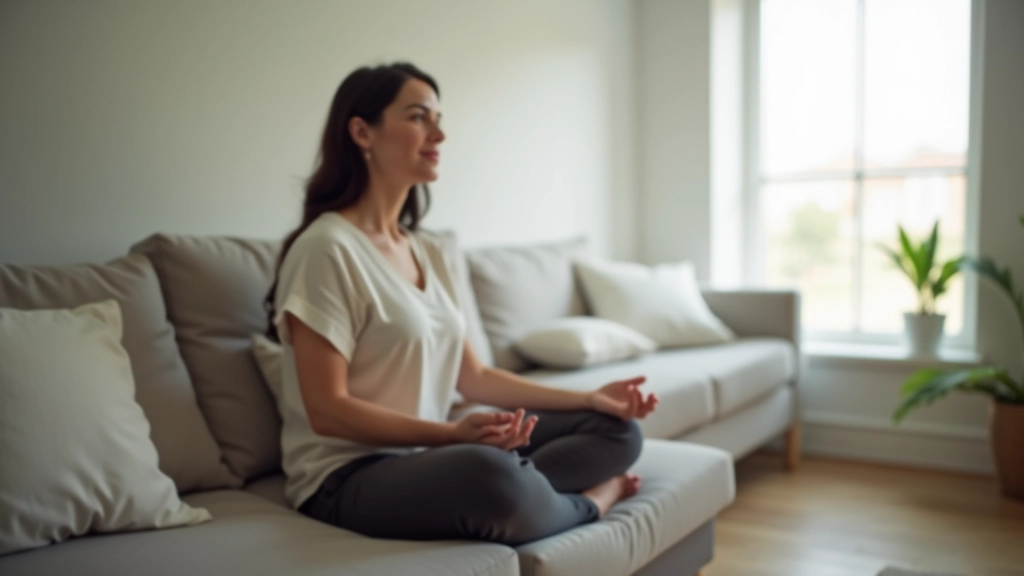
This technique is used by military personnel and first responders because it works fast. It settles your nervous system in about two minutes. The pattern is simple: breathe in for four counts, hold for four, breathe out for four, hold for four. Repeat four to six times.
Why it works: When you’re stressed, you’re probably breathing shallowly and quickly. Box breathing forces you to slow down and creates a rhythm your nervous system recognizes as “safe.” The hold periods are crucial — they give your parasympathetic nervous system time to activate.
Pro tip: Don’t force the breath. It’s not about how much air you take in. It’s about the rhythm. Count steadily and let your body follow the pattern naturally.
Physical Anchoring: Using Your Body
Sometimes you need something more immediate than breathing. Physical anchoring gives you that. It’s pressing your feet firmly into the ground, squeezing a stress ball, or holding an ice cube. The sensation pulls you out of your head and into your body.
The pressure activates something called proprioception — your body’s awareness of where it is in space. When panic is screaming at you, a strong physical sensation says “you’re here, you’re safe, you’re grounded.” This works especially well if you’re someone who gets anxious in crowds or unfamiliar situations.
The Feet Press
Push your feet hard into the ground for 10 seconds. Release. Repeat 3 times. You’ll feel grounded and present.
Cold Water
Splash your face or hold your wrists under cold water for 15 seconds. It activates your dive reflex and slows your heart rate immediately.
Pressure Points
Press your fingernails into your palm firmly for 10 seconds. The sensation is strong and distracting without being painful.

Timing Matters: When to Use Each Technique
Different situations call for different tools. You wouldn’t use box breathing in the middle of a presentation (you’d look strange). You need to know what works when.
In a meeting or public space
Use the 5-4-3-2-1 technique. It looks like you’re just paying attention. Takes two minutes. Completely discreet.
Before something stressful
Box breathing. Do it in the bathroom, in your car, or at your desk with the door closed. Two minutes of box breathing and you’re genuinely calmer.
In acute panic or overwhelming emotion
Physical anchoring first. Your nervous system needs that strong sensation to interrupt the panic cycle. Then move to breathing.
Throughout your day
Micro-practices. Ten seconds of feet pressing. One round of box breathing. These build your resilience over time.
The Key: Practice Before You Need It
Here’s the thing that separates people who use these techniques effectively from people who try them once and forget about them. Practice matters. A lot.
When you’re actually stressed, your brain doesn’t have access to new information. You fall back on what’s automatic, what you’ve rehearsed. So practice these techniques when you’re calm. Spend five minutes doing the 5-4-3-2-1 method while you’re having your morning coffee. Do one round of box breathing after lunch. These aren’t just exercises — they’re building neural pathways that’ll activate when you need them.
We recommend picking ONE technique and using it consistently for a week. Don’t try all five at once. Get familiar with one. Feel how it works in your body. Then add another. This way you’re building a genuine toolkit, not just reading about techniques.
“The techniques aren’t magic. They work because you’ve rehearsed them. Your nervous system learns that these patterns mean ‘you’re safe now.’ That’s the whole mechanism.”
Building Your Calm Under Pressure
High-pressure moments are part of life. Work changes, unexpected challenges at home, situations where everything feels urgent and overwhelming. You can’t avoid those moments. But you can change how you respond to them.
Start with one technique. Use it this week. Notice what happens. Does the 5-4-3-2-1 work better for you than box breathing? Do you prefer physical anchoring? There’s no right answer — there’s just what works for you. The goal isn’t to become someone who never gets stressed. It’s to become someone who can respond calmly when stress arrives. That’s resilience.
Important Note
The techniques described here are educational and designed for managing everyday stress and anxiety. They’re not a substitute for professional mental health support. If you’re experiencing severe anxiety, panic attacks, or any mental health condition that significantly impacts your daily life, please consult a qualified mental health professional. These grounding techniques work best as part of a broader approach to wellbeing, alongside professional guidance when needed.