Steady Mind Logo Steady Mind Contact Us
Contact Us

Meet the Expert

Siobhan O’Connor

Senior Resilience Coach & Content Director at Steady Mind Training Ltd

14 years of evidence-based resilience training across Irish organisations. Helping professionals and teams navigate uncertainty, reframe setbacks, and build lasting mental flexibility for everyday challenges at home and at work.

3,500+
Individuals trained
14
Years experience
2
Advanced degrees
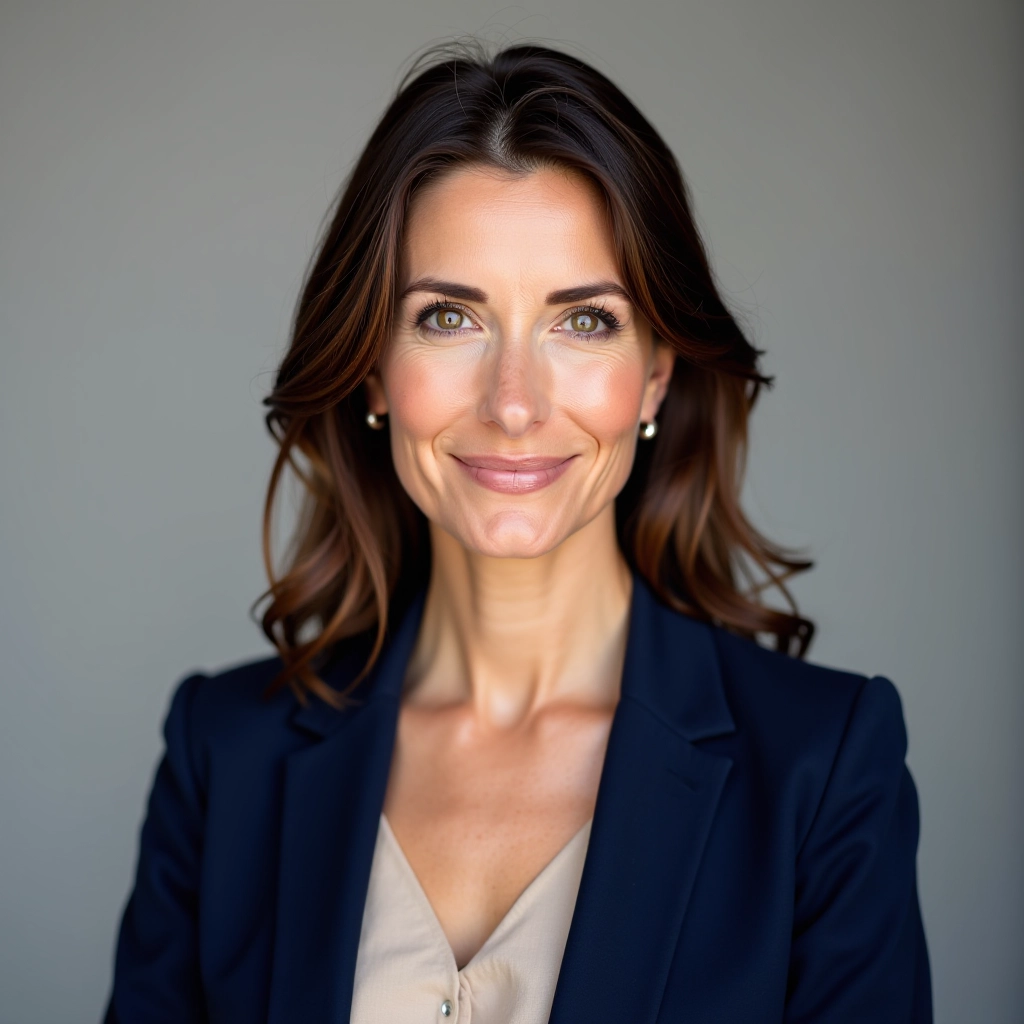
Professional portrait of Siobhan O'Connor, resilience coach with confident posture in modern office setting, warm natural lighting

What Siobhan Teaches

Mental Flexibility

Developing the cognitive agility to shift perspectives when life throws unexpected challenges. Not rigid thinking — adaptable, responsive problem-solving that works in real situations.

Reframing Setbacks

Moving past the shame of failure. She teaches practical techniques for viewing setbacks as information and opportunities for growth rather than personal defeat. It’s a learnable skill.

Calming Techniques

Real, usable tools for high-pressure moments. Breathing methods, grounding exercises, and nervous system regulation that actually work when you’re stressed — not theory, tested practice.

Workplace Adaptability

Navigating organisational change, restructures, and leadership transitions without losing your footing. Her programmes work across Irish industries — tech, healthcare, manufacturing, government.

Composure Under Uncertainty

Building steady presence when you don’t have all the answers. It’s not about being fearless — it’s about being capable and grounded even when things feel unstable.

Personal Resilience Toolkits

Helping people build their own customised collection of techniques. What works for one person doesn’t always work for another — she shows you how to discover what sticks for you.

In Her Words

A closer look at how Siobhan approaches resilience training and why she’s passionate about this work

What made you focus on resilience training specifically?

Early in my career as an occupational health advisor in Dublin, I saw the real cost of workplace stress — not just the statistics, but actual people struggling with change and pressure. I’d watch someone get promoted or a department restructure happen, and they’d completely lose their footing. There’s a huge gap between knowing “stress is normal” and actually having tools to handle it. I got frustrated that there wasn’t practical, evidence-based training available, so I went back to study. My Master’s at UCD opened my eyes to the psychology behind it all, but more importantly, it showed me that resilience isn’t something you’re born with — it’s a skill you can learn and strengthen. That’s been my mission ever since.

Your approach seems different from typical stress management courses. Why?

Most stress training I saw was either too theoretical or treated symptoms instead of building actual capacity. You’d get breathing exercises that felt disconnected from real workplace chaos, or mindfulness tips that didn’t stick when things got genuinely difficult. What I do is rooted in cognitive behavioural psychology, but it’s always tested in real Irish environments — schools, hospitals, tech companies, manufacturing plants. I work with what actually matters to people: adapting to change, reframing failure, staying steady when uncertainty hits. And I’m honest about it: this isn’t quick fixes. It’s deliberate practice. Like physical fitness. You don’t get stronger from one gym session, and you don’t build mental flexibility from one workshop. But if you commit to it, the changes are genuine and lasting.

What’s the biggest misconception about resilience?

That it means never struggling or always being positive. That’s nonsense. Real resilience is feeling the difficulty and moving through it anyway. It’s acknowledging setbacks without letting them define you. I’ve worked with people who’ve faced redundancy, grief, serious health challenges, major life transitions. The resilient ones aren’t the ones who smile through everything — they’re the ones who can sit with discomfort, understand what’s happening, and figure out their next step. There’s actually more strength in that than in pretending everything’s fine. And that’s what I teach: how to be genuinely capable, not just outwardly composed.

How do you help people reframe setbacks?

With concrete techniques, not motivation speeches. We start by looking at how the brain naturally responds to failure — the shame response, the avoidance impulse — and why that evolved. Then I teach people how to pause that reaction and shift their lens. A failed project isn’t proof you’re incompetent; it’s information about what needs adjusting. A relationship ending isn’t personal failure; it’s a life event that tells you something about what you need. A missed promotion is disappointment, yes, but also data about where you stand and what might come next. The reframing isn’t fake positivity. It’s accurate perspective. And when people practice this repeatedly, it becomes automatic. The shame loosens. The learning actually happens.

Why do you focus on everyday challenges rather than crisis management?

Because that’s where resilience actually lives. Anyone can access crisis mode when something catastrophic happens — adrenaline takes over. But everyday challenges? That’s where most people get worn down. A difficult team member. A tight deadline. A health concern. Uncertainty about the future. Constant small stressors add up more than single big ones. If you build your capacity to handle everyday adaptations, unexpected pressures, and ordinary setbacks, then when genuine crisis arrives, you’ve already got the foundation. Plus, most people’s lives aren’t defined by one dramatic moment — they’re defined by how they show up on Tuesday mornings when things are complicated. That’s what I teach toward.

Education & Credentials

Education

  • Master of Science in Applied Positive Psychology University College Dublin, 2015
  • Bachelor of Science in Occupational Health & Safety Dublin City University, 2011
  • Diploma in Cognitive Behavioural Coaching Institute of Life Coach Training, London, 2016

Certifications & Accreditation

  • Accredited Coach (ICF) International Coach Federation, since 2017
  • Certified Resilience Trainer Resilience Institute Europe, 2018
  • Advanced Training in Stress Management & Mindfulness Center for Workplace Excellence, Dublin, 2019

Professional Experience

  • Senior Resilience Coach & Content Director Steady Mind Training Ltd, 2019–present
  • Resilience Programme Lead Multiple Irish organisations (corporate, healthcare, public sector), 2015–2019
  • Occupational Health Advisor Dublin-based multinational, 2011–2015

Her Philosophy on Resilience

Siobhan’s approach rests on a simple conviction: resilience isn’t something you either have or don’t. It’s built through practice, like strength training for your mind. And it starts with honest acknowledgment.

She doesn’t teach people to “be positive” or “push through.” Instead, she helps them understand what’s actually happening in their nervous system when stress hits. Why we avoid. Why we feel shame. Why uncertainty triggers our threat response. Once you know the mechanism, you can work with it instead of fighting it.

The core of her work is teaching people to reframe. Not to deny difficulty, but to see it clearly. A workplace restructure isn’t personal rejection — it’s organisational change that you can adapt to. A failed attempt isn’t proof of inadequacy — it’s information about what needs adjusting. A moment of anxiety isn’t weakness — it’s your system registering something worth paying attention to.

And crucially, she insists on practical tools. Not just insights. She’s trained thousands of people in concrete techniques: breathing methods, cognitive reframing exercises, nervous system regulation. Things that work in real moments, not just in theory.

“Resilience isn’t about never struggling. It’s about being capable and steady even when things are genuinely difficult. That’s a skill. And skills are learnable.”

— Siobhan O’Connor

Evidence-Based

Everything she teaches is grounded in psychology research and tested in real environments. Not trends or feel-good theory — actual science that works.

Practical & Specific

Concrete techniques you can use today. In your workplace. At home. During difficult moments. Not abstract concepts — actual practices that shift how you respond.

Honest & Compassionate

She doesn’t pretend resilience is easy. She meets people where they are — struggling, uncertain, overwhelmed — and builds from there with genuine understanding.

Culturally Informed

Her training is built around Irish workplaces, Irish life, Irish contexts. Not generic international frameworks — approaches that actually fit how people live and work here.

Featured Work & Articles

Research Article March 2024

Stress Resilience in Irish Workplaces: Adapting to Organisational Change

Published in the Journal of Occupational Health Psychology. A longitudinal study examining how Irish professionals respond to workplace restructuring and what factors build genuine adaptability rather than just coping mechanisms.

Read related article
Guide March 2026

Reframing Setbacks as Learning Opportunities

A practical guide on moving past shame and seeing failure as information. She’s developed this approach through years of coaching people through career setbacks, relationship difficulties, and personal challenges.

Read full guide
Techniques & Tools March 2026

Calming Techniques for High-Pressure Moments

Real, usable methods for regulating your nervous system when stress spikes. Breathing exercises, grounding techniques, and cognitive strategies tested with hundreds of professionals under actual pressure.

Learn the techniques
Framework March 2026

Building Your Personal Resilience Toolkit

A step-by-step process for discovering which techniques work best for you. Not all approaches fit all people — she shows how to build a customised collection of tools that actually stick.

Build your toolkit

Explore Siobhan’s Resilience Training

Ready to build your own mental flexibility and adaptability? Start with practical techniques, real frameworks, and honest guidance for navigating everyday challenges at home and at work.